
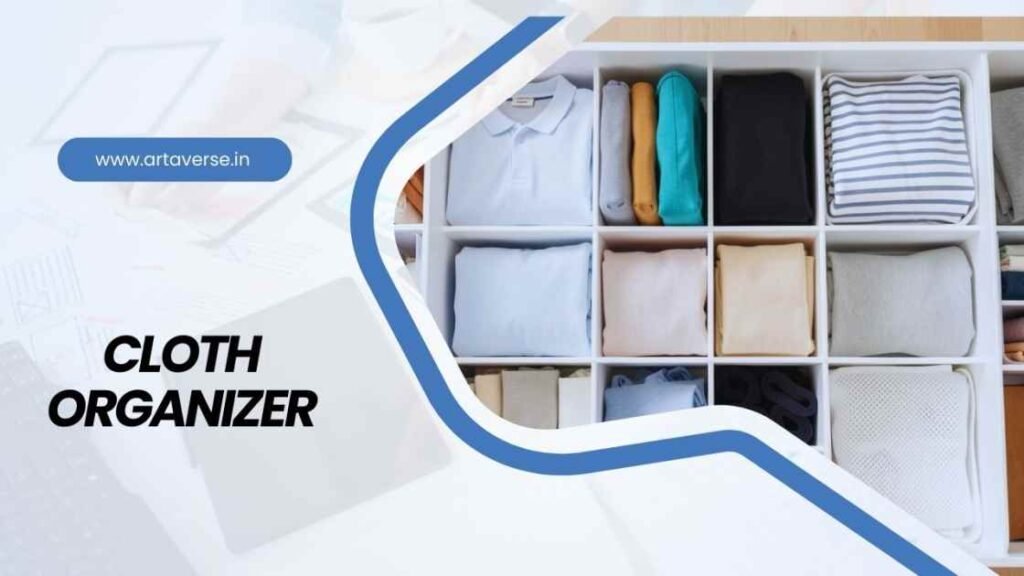
Living in a cluttered environment can lead to unnecessary stress and wasted time. Many people struggle to find the clothes they want because their closets are filled with items they rarely wear. A clothes organizer is the perfect solution to this common problem.
By definition, a clothes organizer is any specialized clothing storage box or system designed to organize and protect clothing. In this expert guide, I delve into how these tools solve storage problems and help you maintain a tidy home. We focus on practical, effective advice for families in the India and around the world..
What Are Cloth Organizers?
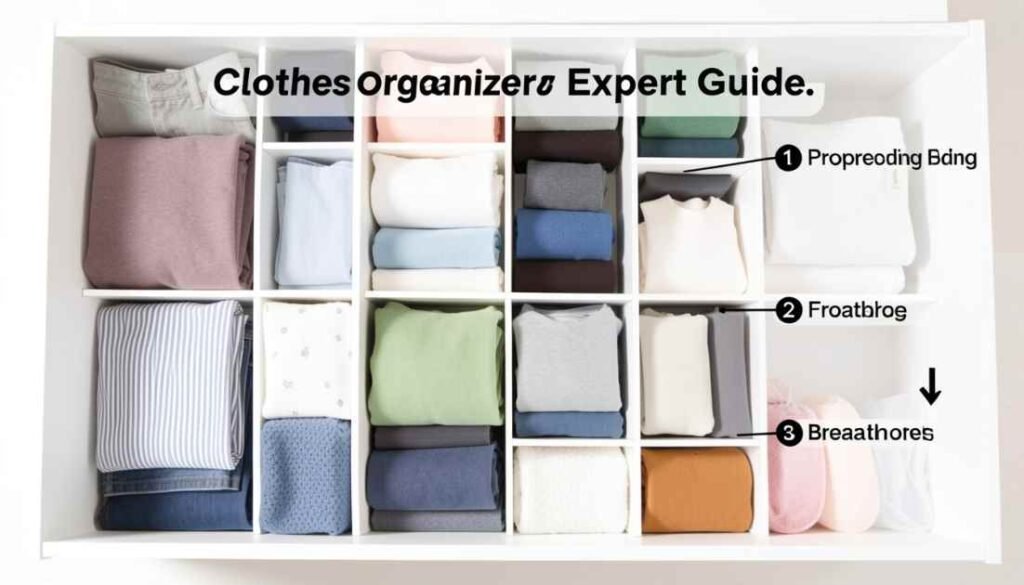
A cloth organizer is a versatile storage unit designed to hold various types of clothing. These come in many shapes and sizes including the popular cloth organizer box and the flexible cloth organizer bag. Unlike traditional plastic bins these fabric based solutions are often breathable and lightweight.
Types of Cloth Organizers
- Cloth Organizer Box: These are usually rigid or semi rigid containers. They often feature internal dividers for socks or underwear.
- Cloth Organizer Bag: These are soft sided and perfect for bulky items like blankets or winter coats. They can be squeezed into tight corners.
- Hanging Organizers: These attach to your closet rod and create instant shelving.
- Underbed Boxes: These are low profile versions designed to utilize the unused space beneath your bed frame.
Using a cloth organizer for wardrobe management allows you to separate items by season or frequency of use. This keeps your main closet area free for the clothes you wear every single day.
Benefits of Micro Space Storage
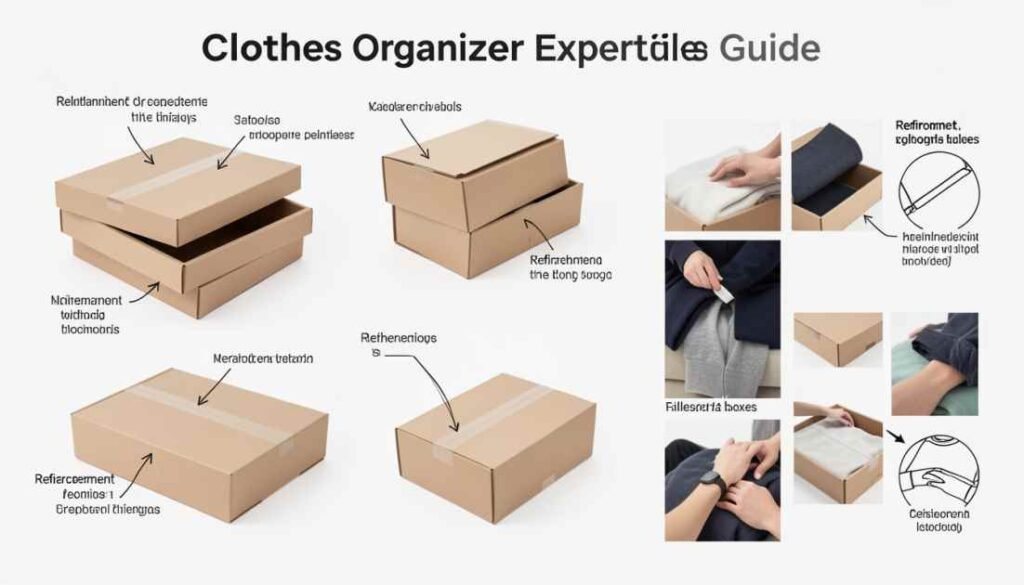
Micro space storage refers to the practice of organizing small items within larger containers. This is where a cloth organizer truly shines. Instead of having a drawer full of loose shirts you use a cloth organizer box to create dedicated slots for each piece.
Why Micro Storage Matters
- Prevents Slumping: Clothes stay upright rather than falling into a messy pile.
- Saves Time: You can see every item at a glance without digging.
- Protects Fabrics: Delicate items are not crushed under heavier garments.
- Encourages Tidiness: It is much easier to put an item back in a dedicated slot than to fold it back into a stack.
Choosing the Best Materials
The material of your cloth organizer determines its durability and how well it protects your clothes. Common materials include nonwoven fabric, Oxford cloth, and mesh.
Comparison Table: Cloth Organizer Materials
| Material Type | Durability | Breathability | Best Use Case |
| Nonwoven Fabric | Medium | High | Everyday items like T shirts |
| Oxford Cloth | High | Medium | Bulky winter coats and bags |
| Mesh | Medium | Maximum | Underwear and activewear |
| Canvas | Very High | Medium | Heavy jeans and linens |
| Clear PVC | High | Low | Seeing contents at a glance |
When selecting a cloth organizer for wardrobe use, consider Oxford cloth for long term durability. If you need a baby cloth organizer look for soft nonwoven fabrics that are gentle on tiny garments.
Maximizing Vertical Closet Space
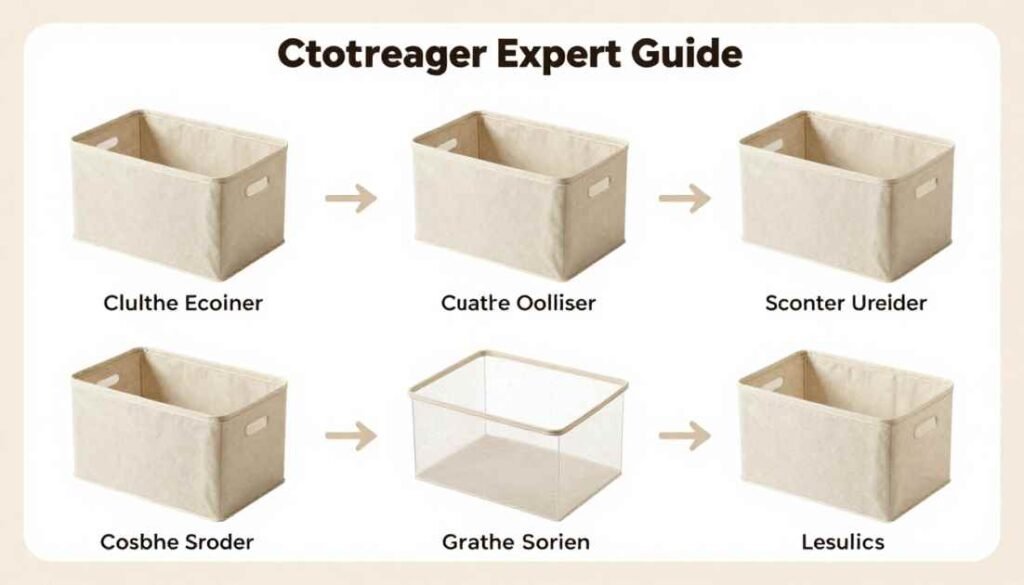
One of the biggest mistakes in home organization is ignoring the vertical space. Most closets have a lot of empty air above the hanging rod or below the shelves. A cloth organizer box is often stackable which allows you to build upward.
Tips for Vertical Storage
- Stackable Boxes: Use rigid boxes with lids to create towers of storage.
- Hanging Shelves: A fabric hanging cloth organizer adds five or six levels of storage to a single rod.
- Top Shelf Utility: Place seasonal cloth organizer bag units on the very top shelf where they are out of the way.
- Door Organizers: Use the back of the closet door for small accessories.
Improving Clothing Accessibility
Accessibility is the key to a functional wardrobe. If you cannot reach it you will not wear it. A cloth organizer box with a clear window is a game changer. It allows you to identify contents without opening the lid.
Ways to Improve Access
- Front Opening Bags: Choose a cloth organizer bag with a front zipper so you can pull out a sweater from the bottom of the stack.
- Labeling: Even if the box is clear a small label can help other family members keep things organized.
- Color Identification: Assign distinct colors to each family member.
- For example use blue for adult clothes and yellow for a baby cloth organizer.
File Folding for Efficiency
The file folding method popularized by organization experts involves folding clothes into small rectangles that stand vertically. This works perfectly with a cloth organizer box.
How to File Fold
- Step One: Lay the garment flat on a clean surface.
- Step Two: Fold the sides toward the center to create a long rectangle.
- Step Three: Fold the rectangle in half or thirds until it can stand on its edge.
- Step Four: Place the folded item into your cloth organizer like a file in a cabinet.
This method ensures that when you pull one shirt out the rest do not come tumbling down. It is the most efficient way to use a cloth organizer for wardrobe drawers.
Protecting Your Wardrobe
A high quality cloth organizer does more than just hold clothes. It protects them from environmental damage. Dust and moisture are the enemies of fine fabrics.
Protection Features to Look For
- Dust Covers: Ensure your boxes have tight fitting lids or zippers.
- Breathable Fabric: This prevents the “musty” smell that occurs when air cannot circulate.
- Pest Resistance: Sturdy zippers on a cloth organizer bag keep moths and silverfish away.
- Moisture Barriers: Some Oxford cloth organizers have a waterproof lining to protect against dampness in basements or attics.
Creative Multi Room Uses
A cloth organizer is not just for the bedroom. These versatile tools can be used throughout the house to solve various storage problems.
Beyond the Closet
- Living Room: Use a large cloth organizer box to store extra throw blankets and pillows.
- Nursery: A baby cloth organizer is perfect for diapers, wipes, and small toys.
- Office: Smaller fabric bins can hold cables, stationery, and paper supplies.
- Laundry Room: Keep different types of detergent or cleaning cloths separated.
- Bathroom: Store clean towels or toilet paper rolls in a stylish mesh organizer.
Mental Benefits of Organization
There is a strong connection between a clean home and a calm mind. Using a cloth organizer to remove visual clutter can significantly reduce daily anxiety.
Psychological Impacts
- Reduced Decision Fatigue: When your clothes are neatly displayed in a cloth organizer box choosing an outfit is faster.
- Sense of Control: Mastering your physical space helps you feel more in control of other areas of your life.
- Improved Sleep: A tidy bedroom promotes better rest. Removing piles of laundry from sight allows the brain to relax.
Essential Buying Features
Before you purchase a new cloth organizer you should look for specific features that ensure longevity and ease of use.
What to Check
- Reinforced Handles: Essential for a cloth organizer bag that you plan to move frequently.
- Sturdy Zippers: Look for double zippers that glide smoothly.
- Internal Support: High quality boxes often have metal frames or thick cardboard inserts to keep their shape.
- Ease of Cleaning: Check if the fabric is wipeable or machine washable.
- Size Compatibility: Measure your closet shelves before buying a cloth organizer for wardrobe use to ensure a perfect fit.
Conclusion
A cloth organizer is a simple yet powerful tool for anyone looking to improve their home life. From the versatile cloth organizer box to the spacious cloth organizer bag these items provide a dedicated home for every garment. By using vertical space and adopting techniques like file folding you can make even the smallest closet feel like a boutique.
Remember that the goal is not just to hide the mess but to create a system that works for you every day. Start small with one baby cloth organizer or a single set of wardrobe boxes and watch how much easier your mornings become.
Frequently Asked Questions
What is the best way to clean a fabric cloth organizer?
Most fabric organizers can be cleaned with a damp cloth and mild soap. Avoid soaking them in water if they have cardboard supports. Always let them air dry completely before putting clothes back inside.
Can I use a cloth organizer bag for long term storage?
Yes. A cloth organizer bag made of Oxford cloth or breathable nonwoven fabric is excellent for long term storage. Just make sure the clothes are clean and dry before packing them away.
How do I prevent my clothes from smelling musty in a box?
Choose a cloth organizer made of breathable material. You can also add cedar blocks or lavender sachets to the box to keep everything smelling fresh.
Are cloth organizers better than plastic bins?
Cloth organizers are often better for clothing because they allow for better air circulation. This prevents moisture buildup. However plastic bins might be better for very damp environments like a basement.
How many clothes can fit in a standard cloth organizer box?
A medium sized cloth organizer box can typically hold 10 to 15 T shirts if you use the file folding method. For bulkier items like jeans you might fit 6 to 8 pairs.