
Government communications require a robust and protected environment to ensure data integrity. The gswan mail system serves as the primary communication backbone for government officials. This guide provides an exhaustive overview of the features, login procedures, and configuration steps for this critical service.
What Is Gswan Mail?

The GSWAN infrastructure represents the State Wide Area Network designed to connect various government offices. Gswan mail is the official electronic messaging service provided over this network. It allows seamless communication between state headquarters, district offices, and taluka levels. I have observed that many officials rely on this platform for daily administrative tasks because it operates on a private, secure network rather than the public internet.
The architecture uses a multi-tier system to ensure high availability. The backbone consists of high-speed leased lines and fibre optic cables. This setup supports voice, data, and video services. The gswan mail gswan integration ensures that every department has a dedicated space within the digital ecosystem. By using a centralized server farm, the government maintains complete control over the data flow.
Gswan Mail Login Purpose
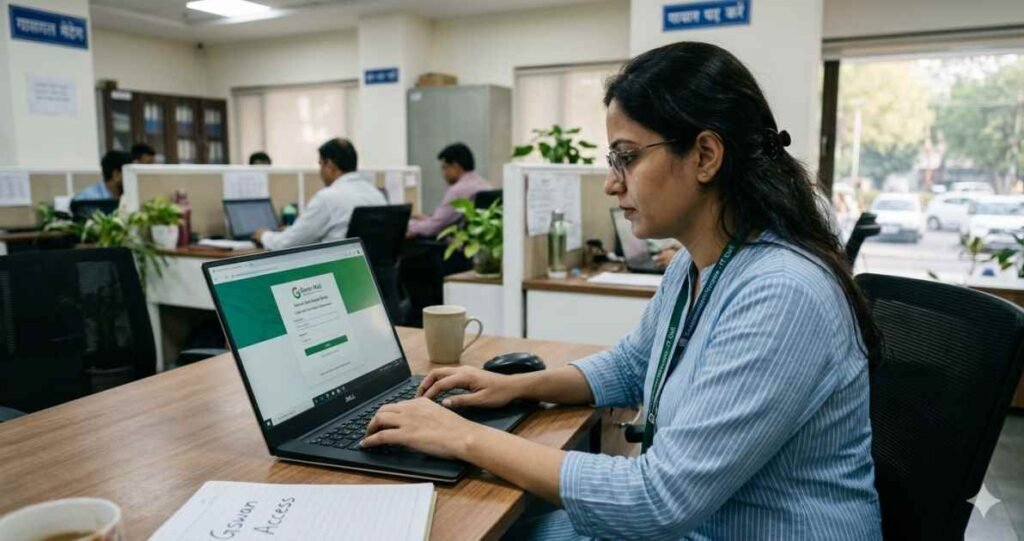
The primary goal of the gswan mail login portal is to facilitate secure information exchange. Government employees use this portal to send official circulars, memos, and sensitive documents. Using a dedicated government mail service instead of private providers prevents data leaks and ensures compliance with national security protocols.
Every login session is monitored to maintain a trail of official correspondence. This accountability is vital for administrative transparency. The system also supports large file transfers, which are often required for departmental reports. Accessing the portal ensures that the user is part of the trusted government network.
Comparison of Gswan Mail Features
| Feature | Description |
| Network Type | Private State-Wide Area Network |
| Security | Multi-factor authentication and SSL |
| Access | Restricted to authorized government personnel |
| Integration | Compatible with Outlook and mobile clients |
| Storage | Scalable mailboxes based on user rank |
Official Access for Government Users
Access to gswan mail is not available to the general public. Only verified state government employees receive credentials. This process involves a formal application through the respective department head. Once the application is processed, the IT cell issues a unique username and a temporary password.
Users must access the portal through the intranet or a secure VPN if working remotely. This restriction ensures that the mail server remains shielded from external threats. The eligibility extends to various departments, including education, revenue, and health. Each department receives a specific domain suffix to identify the origin of communications.
Secure Login Features
Security remains the cornerstone of the gswan mail platform. It is important to clarify that the system uses advanced encryption to protect messages. When a user enters their gswan mail login details, the data travels through an encrypted tunnel. This prevents hackers from intercepting sensitive information during transmission.
Key Security Protocols
- Multi-Factor Authentication: Most accounts now require a secondary verification code sent via the Kavach app.
- IP Filtering: Access is often restricted to specific IP addresses belonging to government offices.
- Automatic Session Timeout: The portal logs out users after a period of inactivity to prevent unauthorized access.
- SSL Certificates: The website uses high-grade SSL certificates to verify the server’s identity.
Email Account Setup
Setting up the account requires following specific technical parameters. Most users prefer the web interface for its simplicity. However, power users often integrate gswan mail outlook for better management of folders and offline access. I suggest following these configuration steps for a smooth setup.
Outlook Configuration for Gswan Mail
To configure gswan mail outlook, users must enter the correct IMAP or POP3 settings. Open the Outlook application and navigate to the account settings section. Select the option to add a new account and choose manual setup.
- Incoming Mail Server: Enter the specific server address provided by the IT department, typically mail.haryana.gov.in or a similar address.
- Outgoing Mail Server (SMTP): Use the same address as the incoming server.
- Port Numbers: Use port 993 for IMAP with SSL or port 995 for POP3 with SSL.
- SMTP Port: Port 465 or 587 is generally required for secure outgoing mail.
- Authentication: Ensure the option for outgoing server authentication is checked.
Password and Security Settings
Maintaining a strong password is the first line of defense. The system enforces a strict password policy. Users must create passwords that include uppercase letters, lowercase letters, numbers, and special characters. Frequent password changes are mandatory, usually every 90 days.
If a user suspects a security breach, they must change the password immediately through the settings menu. Recovery options include a registered mobile number or an alternative email address. It is crucial not to share credentials with colleagues, as the account is tied to the officer’s individual identity.
Archive and Old Mail Access
Over time, mailboxes can become full due to large attachments. The gswan mail system provides an archiving feature to help manage storage. Individuals can transfer previous emails to a local archive directory in Outlook or use the server-side archive feature. I have analyzed the security of these archives and found that they maintain the same encryption level as Active Mail.
- Manual Archiving: Select specific folders and move them to a PST file.
- Server Cleanup: Periodically delete unnecessary items from the Sent and Trash folders.
- Search Functionality: Use the advanced search tool to find old correspondence within the archive.
Login Errors and Fixes
Technical glitches can sometimes prevent successful access to the gswan mail login page. I have seen login errors caused by incorrect proxy settings or outdated browser cache. Following a systematic troubleshooting approach usually resolves most issues.
Common Troubleshooting Steps
- Check Internet Connectivity: Ensure the GSWAN link is active and the network cable is connected.
- Clear Browser Cache: Remove temporary internet files and cookies from the browser settings.
- Verify Proxy Settings: Ensure the browser is configured to use the correct GSWAN proxy IP and port.
- Disable VPN: If accessing from within the office, turn off any external VPN that might conflict with the local network.
- Update Browser: Use the latest version of Chrome or Firefox for the best compatibility.
Helpdesk and Support
When self-help steps fail, the official helpdesk is available for assistance. Each district has a dedicated IT coordinator responsible for GSWAN services. Users can contact the helpdesk via a toll-free number or by visiting the local NIC office.
Support includes password resets, account unlocking, and assistance with gswan mail outlook integration. Providing the employee ID and department details helps the support team resolve the issue faster. Documentation and user manuals are also available for download on the main GSWAN portal.
FAQs
How do I reset my Gswan mail password?
Visit the official login page and click the “Forgot password” link. Follow the prompts to receive a reset code on the registered mobile number. Enter the code and create a new secure password.
Can I access Gswan mail on my mobile phone?
Yes, the service supports mobile access through standard mail apps using IMAP settings. Ensure the Kavach app is installed for secondary authentication if required by the department.
Why is the Gswan mail login page not loading?
The page might not load if the user is outside the government network. Ensure the computer is connected to the GSWAN intranet or a secure government VPN.
What is the maximum attachment size for Gswan mail?
The standard attachment limit is usually 10MB to 20MB. For larger files, I recommend using the official government cloud storage or file-sharing services.
Is the Gswan mail service available 24/7?
The service is designed for constant availability. However, occasional maintenance windows might result in brief periods of downtime. These are usually scheduled during non-working hours.