
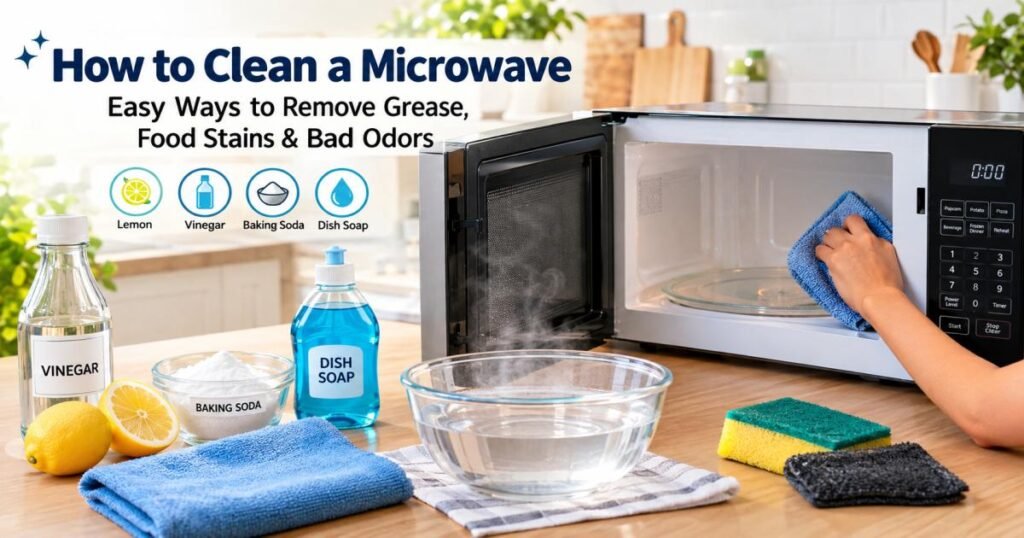
Quick answer: To clean a microwave, heat a bowl of water with lemon slices or white vinegar for 3 to 5 minutes. Keep the door closed for an additional 5 minutes to allow the steam to soften the grime. Then, wipe down the inside from top to bottom with a damp cloth. Remember to wash the turntable, clean the door seal, and dry all parts thoroughly before using the microwave again.
That one routine handles most messes. Below, you’ll find the full steps, plus fixes for thick grease, burnt food, and lingering smells.
Think about the last time you reheated a bowl of curry or pasta sauce. The lid was off, the sauce popped, and the splatter dried on the walls. Do that a few times a week and the inside turns sticky and yellow. Old grease holds smells, and burnt spots can smoke the next time you cook. Learning how to clean a microwave takes about 15 minutes, and you only need things you already own.
How Often Should You Clean a Microwave?
Wipe spills the same day, and do a full clean every 2 to 4 weeks. Fresh splatter wipes off in seconds. Dried splatter can take 15 minutes of soaking.
Use this schedule:
- After a spill: Wipe it with a damp cloth once the microwave cools.
- Once a week: Wipe the inside, the door, and the handle.
- Every 2 to 4 weeks: Do a full steam clean.
- Right away: Clean after cooking fish, curry, or anything that burns or boils over.
A household that uses the microwave several times a day will typically need a full clean every two weeks. If you use it a few times a week, once a month is enough.
What You Need to Clean a Microwave
You don’t need special products. Gather these:
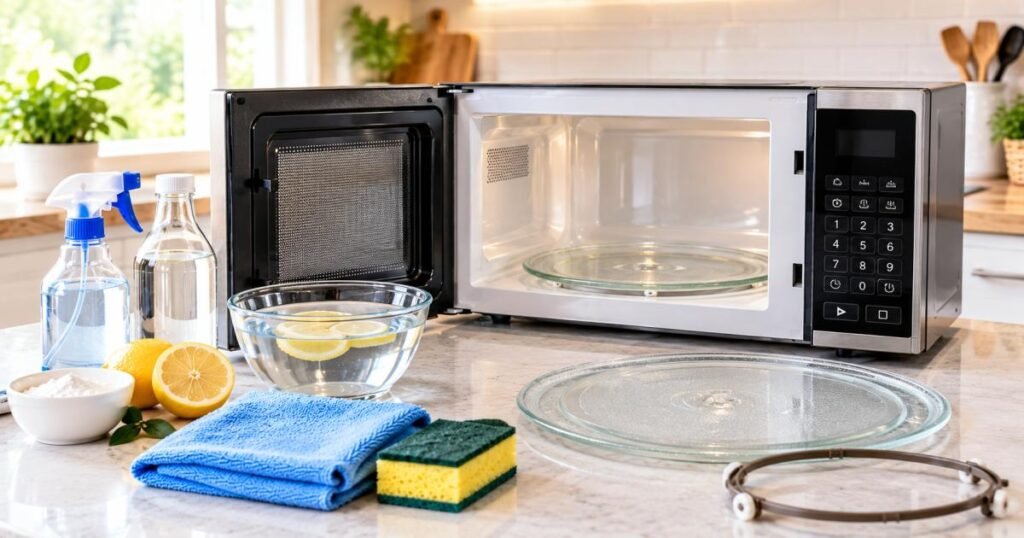
- A microwave-safe bowl or large glass measuring cup
- Water
- A lemon or white vinegar
- Baking soda
- A soft sponge and a microfiber cloth
- Mild dish soap
- An old toothbrush for corners
- A wooden spoon or a few toothpicks
- Oven mitts
The wooden spoon matters for safety. Plain water in a smooth bowl can heat past its boiling point without bubbling, which is called superheating. When you bump the bowl, the water can burst up and scald you. A wooden spoon gives the bubbles a place to form. Also let the bowl sit for about 30 seconds after the timer ends before you move it.
How to Clean a Microwave Step by Step
This method works on nearly every home microwave, from a small dorm model to a large family unit. Check your user manual for any rules specific to your brand.
1. Remove the Turntable and Loose Food
Take out the glass plate and the plastic roller ring under it. Tip any crumbs into the bin. With the plate gone, you can reach the floor of the microwave and wipe it later without lifting anything.
2. Steam the Inside With Water
Pour 1 cup of water into a microwave-safe bowl and add a few lemon slices or 2 tablespoons of white vinegar. Place the wooden spoon in the bowl and set the bowl in the center.
Heat on high for 3 to 5 minutes, until the water boils and the window fogs up. Then keep the door closed for 5 more minutes. Most people skip this wait, and it is the step that does the real work. The steam keeps softening grease and dried food while you wait.
3. Wipe Away Loosened Grease and Food
Put on oven mitts and take out the bowl. Dip a sponge in the hot water if it’s safe to touch, or use a damp cloth. Wipe the ceiling first, then the walls, then the floor. Going top to bottom stops dirty drips from landing on parts you just cleaned.
Most grime will slide off with light pressure. If a spot holds on, lay the damp cloth over it for a minute, then try again. Don’t scrub hard.
4. Clean the Turntable and Roller Ring
Wash the glass plate and ring in warm, soapy water. Rinse and dry them thoroughly. If the plate is hot, allow it to cool first, as cold water can cause the hot glass to crack.
Wipe the track on the microwave floor where the ring rolls. Crumbs collect there and can make the plate stick or wobble.
5. Clean the Microwave Door and Seal
Grease builds up on the door edge, the frame, and the seal. Wipe both sides of the door with a cloth and a little soapy water. Then wipe again with a cloth dipped in plain water. Use the old toothbrush on hinges and corners.
Pay attention to the seal. If food sits between the door and the frame, the door may not close fully, and a door that doesn’t close well is a safety risk.
6. Wipe the Exterior and Control Panel
Wipe the outside with a damp cloth. On the control panel, use a cloth that is barely wet. Never spray cleaner straight onto the buttons or screen, since liquid can slip behind the panel. Spray the cloth instead, then wipe.
Wipe the handle too. It gets touched more than any other part.
7. Dry Everything Before Using the Microwave
Use a clean cloth to dry the inside, the door, and the plate. Leave the door open for a few minutes to allow damp air to escape. First, put the ring back, and then set the plate on top. Spin it by hand to check that it turns freely.
How to Clean a Microwave With Lemon
Lemon works best for light to medium dirt and for mild smells. It contains citric acid, which helps loosen dried food, and it leaves a fresh scent.
- Squeeze half a lemon into a bowl with 1 cup of water, then drop in both halves.
- Add a wooden spoon.
- Heat on high for 3 to 5 minutes.
- Keep the door shut for 5 minutes.
- Wipe the inside with a damp cloth.
For thick grease, lemon alone may not be enough. Follow it with the soap method in the grease section below.
How to Clean a Microwave With Vinegar
White vinegar suits grease and strong smells. Household white vinegar is typically about 5% acetic acid, which is strong enough to cut through light grease and mild enough for regular use when diluted.
- Mix 1 cup of water with 2 tablespoons of white vinegar in a microwave-safe bowl.
- Add a wooden spoon.
- Heat for 3 to 5 minutes until it boils.
- Wait 5 minutes with the door closed.
- Wipe the inside with a damp cloth.
Is it safe? Yes, when you dilute it with water like this. The smell can be sharp, so open the door and let the air move for a while. If it lingers, wipe the inside once with a cloth dipped in plain water.
Never mix vinegar with bleach. The mix releases chlorine gas, which is harmful to breathe. Also skip mixing vinegar and baking soda in the same bowl. They fizz and cancel each other out, so you get a weaker cleaner.
How to Clean a Microwave With Baking Soda
Baking soda is a mild scrub and a natural odor absorber. It lifts stuck-on stains without scratching the way a rough pad does.
Option 1: Steam with baking soda
- Stir 2 tablespoons of baking soda into 1 cup of water.
- Heat for 3 to 5 minutes.
- Wait 5 minutes, then wipe.
Option 2: Paste for tough spots
- Mix 2 tablespoons of baking soda with 1 tablespoon of water into a thick paste.
- Spread it over the stain with a soft cloth.
- Let it sit for 5 to 10 minutes.
- Wipe it off with a damp cloth. Repeat if the stain remains.
Rinse your cloth often. Leftover baking soda leaves a white film, so finish with one more wipe using a clean, damp cloth.
Which Method Should You Pick?
| Problem | Best method | Time |
| Light dirt, mild smell | Lemon steam | About 15 minutes |
| Grease and strong smell | Vinegar steam, then soap wipe | About 15 to 20 minutes |
| Stuck-on or dried spots | Baking soda paste | About 20 minutes |
| Burnt food | Steam, wet paper towel, baking soda paste | About 30 minutes |
How to Remove Grease From a Microwave
Grease forms a sticky film on the ceiling and walls, and it traps odors. Steam rises, so the ceiling usually gets the worst of it.
- Steam the microwave with water and vinegar.
- Mix a few drops of dish soap into a bowl of warm water.
- Dip a cloth in the soapy water and wring it out well.
- Wipe greasy areas in small circles.
- Wipe again with a cloth dipped in clean water to remove the soap.
- Dry with a soft towel.
Dish soap is made to break up oil, so it beats plain water on grease. Use only a little, because extra soap takes a lot of rinsing. For old, layered grease, run the steam step twice in a row before you wipe.
How to Remove Dried or Burnt Food From a Microwave
Burnt food looks hopeless, but patience works better than force.
- Soften it. Steam the microwave for 5 minutes and let it sit.
- Cover the spot. Lay a wet paper towel over the burnt patch for 5 to 10 minutes.
- Add baking soda. Spread a thin paste on the spot and wait 10 minutes.
- Lift gently. Use a soft sponge or a plastic or wooden spatula.
- Wipe and dry. Clean the area with a damp cloth, then dry it.
Never scrape with a knife or steel wool. Scratches can chip the inner coating, and chipped spots collect more food and grease. If you see bare metal or peeling paint, stop heating food in the unit and ask a technician whether it is still safe.
How to Remove Bad Odors From a Microwave
Fish, curry, onion, and burnt popcorn can leave a smell that lasts for days. Try these fixes:
- Lemon steam: Heat lemon water for 3 to 5 minutes and wait 5 minutes.
- Vinegar steam: Use 1 cup of water and 2 tablespoons of white vinegar.
- Baking soda bowl: Leave an open bowl of baking soda in the closed microwave overnight.
- Coffee grounds: Dry grounds in a small bowl can also absorb odor overnight.
If the smell stays, look at the turntable and the door seal. Old food trapped there is a common hidden source. After you clean, leave the door open for 15 to 30 minutes.
If you smell burning plastic or something electrical, unplug the microwave and have it checked. A cleaning trick won’t fix that.
How to Clean a Microwave From the Inside and Outside
A full clean covers four areas.
Cleaning the Interior
Steam first, then wipe from the ceiling to the floor. Check the corners and back wall. Look on the side wall or ceiling for a small, flat, paper-like panel. This is the waveguide cover, and it protects the part that produces the microwaves. Don’t soak it or scrub it. If it looks burnt or torn, read your manual or call a technician.
Cleaning the Turntable
Wash the plate and ring in warm, soapy water, then dry them. Wipe the track beneath. Some plates are dishwasher safe, but check your manual before you try it.
Cleaning the Door and Seal
Wipe both sides of the door, the frame, and the hinge area. Use a little soap, then plain water. A clean seal helps the door shut tight.
Cleaning the Exterior
Wipe the top, sides, handle, and buttons with a soft, damp cloth. On a stainless steel finish, wipe in the direction of the grain, then dry. Unplug the unit before you clean near the vents, and keep water out of the vent slots.
What Not to Use When Cleaning a Microwave
Some common cleaners cause damage or leave fumes behind:
- Steel wool and rough pads: They scratch the inside.
- Bleach and strong chemical sprays: Fumes can linger and settle on food.
- Oven cleaner: It is too harsh for a microwave’s coating.
- Metal tools: Knives and forks scratch, and metal can cause sparks.
- Too much water: Never pour water inside or let it run into vents.
- Spray on the control panel: Always spray the cloth, not the buttons.
Microwave Cleaning Safety Tips
- Let it cool. Wait a few minutes after heating before you touch the inside.
- Wear oven mitts. A bowl of boiling water can scald you.
- Keep a wooden spoon in the bowl. It lowers the risk of sudden splashing.
- Never run the microwave empty. It can damage the unit, so keep a bowl of water inside while steaming.
- Keep metal out. That includes foil and cups with metal trim.
- Unplug it before you clean vents or the outer body.
- Read the manual. Brands differ, and the manual covers your exact model.
- Stop using a damaged unit. A door that won’t close well or a broken seal needs a technician.
How to Keep Your Microwave Clean for Longer
Small habits cut your cleaning time in half:
- Cover your food with a microwave-safe lid or plate to block splatter.
- Pick a bowl that is large enough. Soups and sauces boil over in small bowls.
- Wipe spills at once. It takes seconds while the microwave is still warm.
- Do a quick steam every week or two. A 5-minute steam is easier than one big scrub every few months.
- Wipe the handle whenever you wipe the kitchen counter.
- Open the door for a minute after heating strong-smelling food so moisture and odor can leave.
Common Microwave Cleaning Mistakes to Avoid
- Skipping the wait. Steam needs a few minutes with the door shut to soften dirt.
- Scrubbing dry grime. Hard rubbing on dry food scratches the coating.
- Using too much soap. Unrinsed soap leaves a film and a smell.
- Missing the ceiling, door, and seal. These are the spots most people forget.
- Putting parts back wet. Dry everything first.
- Reaching for harsh cleaners. Stronger products often mean more damage, not a better result.
- Waiting too long. Old food is much harder to remove than fresh food.
Final Thoughts
Cleaning a microwave comes down to four moves: steam, wait, wipe, dry. Use lemon for light dirt and fresh scent, vinegar for grease and odor, and baking soda for stubborn stains. Skip steel wool and harsh sprays, wear oven mitts, and let the unit cool before you reach in.
The easiest habit is also the best one. Cover your food, wipe spills while they’re fresh, and run a short steam clean every week or two. Your microwave will stay cleaner, smell better, and last longer.
FAQs
How do I clean a very dirty microwave?
Steam it twice, with a 5-minute wait after each round. Spread baking soda paste on stuck spots for 10 minutes. Wipe with a damp cloth, then use a soapy cloth on any leftover grease. Finish with a clean-water wipe and dry the inside.
Is it safe to clean a microwave with vinegar?
Yes. White vinegar mixed with water is safe for steaming and wiping. Open the door afterward to let the smell fade. Never mix vinegar with bleach.
Can I use lemon to clean a microwave?
Yes. Lemon water steam loosens light to medium dirt and leaves a fresh scent. For thick grease, follow it with a soapy wipe.
How do I remove burnt food from a microwave?
Steam the inside, then lay a wet paper towel over the burnt spot for several minutes. Rub it gently with baking soda paste and a soft sponge. Use a plastic or wooden spatula on hard bits, and never use steel wool.
How do I get a bad smell out of a microwave?
Steam it with lemon or vinegar. Then leave an open bowl of baking soda inside overnight. Clean the turntable and door seal too, since old food often hides there.
Can I use baking soda to clean a microwave?
Yes. Add it to the steaming water or mix it into a paste for stains. Wipe it off well so no white film remains.
How often should I clean my microwave?
Wipe spills right away, do a quick wipe weekly, and give it a full clean every 2 to 4 weeks. Clean sooner after messy or strong-smelling meals.
Can I use dish soap inside a microwave?
Yes, in small amounts on a damp cloth. Dish soap handles grease well. Wipe it off with a clean, damp cloth so no residue stays inside.