
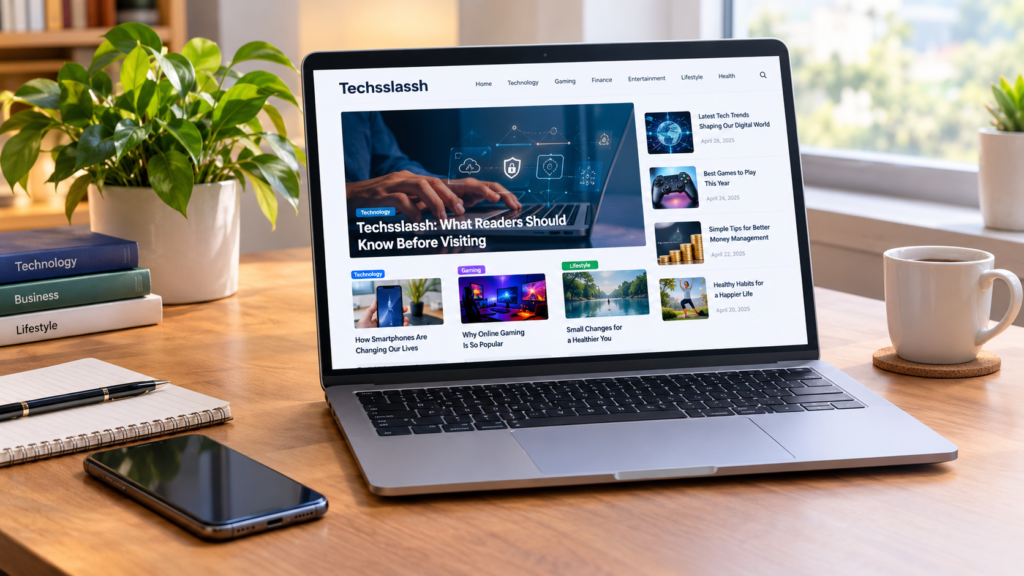
Techsslassh is an online multi-topic content platform that publishes articles on technology, digital trends, gaming, finance, entertainment, lifestyle, and health. Readers who search for techsslassh or techsslassh.com should treat the site as a general information source rather than a final authority. Before you spend time on the pages or act on any advice, confirm the exact domain spelling, check basic browser security signals, note publication dates and author names, and compare important claims with official sources. This habit protects readers in India and other countries who want practical digital updates without assuming every statement is current or independently confirmed.
What Is Techsslassh?
An Overview of Techsslassh.com
Techsslassh.com functions as a content website that gathers and presents information across several everyday digital topics. It resembles many other general-interest platforms that aim to make technology and related subjects approachable for non-specialists. The site typically offers short-to-medium articles written in plain language. These pieces cover news-style updates, practical tips, and broader lifestyle angles. Most visitors arrive through search results looking for quick explanations of gadgets, software changes, or online trends. Because several similarly spelled domains exist, confirming you are on the intended address matters from the first moment you land on the page.
What the Website Says About Its Purpose
Public descriptions linked to Techsslassh present it as a place for technology news, digital insights, and related informational content. The platform describes itself as helpful for readers who want to stay informed about everyday tech developments without heavy technical language. Some pages stress simple explanations and a mix of practical and general-interest material. These self-descriptions focus on accessibility and regular updates rather than specialized investigation or original research. Readers gain a clearer picture when they read the site’s own about or mission statements and then compare those statements with the actual articles published.
Who Might Find the Website Useful?
Casual readers who enjoy browsing technology updates, gaming notes, or light lifestyle pieces may find Techsslassh convenient. Students seeking simple overviews, professionals wanting a quick scan of digital trends, or people in India looking for accessible English-language explanations of global tech topics can treat it as one of several starting points. The site is less suitable for anyone who needs detailed technical analysis, formal regulatory guidance, or time-sensitive financial advice. Anyone using the platform should keep expectations realistic: it serves discovery and orientation more than definitive answers.
What Topics Does Techsslassh Cover?
Technology News and Digital Updates
The main body of content usually centers on technology news and digital updates. Articles often discuss smartphone features, software changes, artificial intelligence developments, app tips, and broader industry movements. The tone tends toward plain explanations that avoid dense technical language, making the material approachable for general audiences. Readers interested in how new tools affect daily life rather than engineering details may find these pieces easy to scan.
Gaming, Finance, and Entertainment
Alongside pure technology coverage, Techsslassh commonly includes sections on gaming, finance-related digital topics, and entertainment. Gaming articles might cover new releases, platform news, or basic tips. Finance pieces often touch on online tools, digital payments, or related trends rather than detailed investment analysis. Entertainment content can range from celebrity-tech crossovers to broader lifestyle notes. This mix keeps the platform broad and searchable across many everyday queries.
Lifestyle, Health, and Other Informational Topics
The site also publishes material under lifestyle, health, education, and similar headings. These articles typically offer general informational overviews rather than professional medical, educational, or specialized advice. For readers in India and other regions, such pieces can introduce ideas, but local context, regulations, and professional guidance remain essential. Treating these topics as conversation starters rather than complete guidance helps maintain appropriate expectations.
Is Techsslassh Safe and Trustworthy?
What Website Security Indicators Can Tell You
Basic browser signals provide a first practical layer of information. Look for HTTPS in the address bar and a lock icon, which indicate encrypted connections for ordinary browsing. Many similar content platforms display these standard features. Checking the domain age and overall presentation can also give a rough sense of how established the site appears. These indicators address connection safety more than the quality or accuracy of the written content itself.
How to Identify Potential Website Red Flags
Certain patterns warrant extra caution. Unexpected download prompts, aggressive pop-ups claiming device problems, or requests for personal or financial details unrelated to the content are clear signals to leave. Inconsistent branding, broken links, or pages that feel heavily commercialized without clear labeling can also raise questions. Because multiple sites use near-identical names, any sudden redirect or slightly different spelling should prompt a pause.
Why Security Checks Alone Cannot Establish Content Reliability
Passing a basic security scan or showing HTTPS does not guarantee that every article is accurate, current, or free of promotional influence. Content reliability depends on sourcing, author expertise, editorial oversight, and transparency about commercial relationships. A site can be technically safe to visit while still publishing information that needs independent verification. Readers should separate the act of browsing from the decision to rely on specific claims.
How to Assess the Credibility of Individual Articles
Evaluate each piece on its own merits. Note whether an author name appears, whether sources are linked or named, and whether the publication date is recent enough for the topic. Look for balanced language rather than exaggerated promises. For any recommendation involving purchases, downloads, or financial steps, treat the article as a starting suggestion and confirm details elsewhere.
Who Owns Techsslassh? What Readers Can Verify
Reviewing the About and Contact Pages
A useful first step is reading the About and Contact sections if they exist. These pages sometimes outline the platform’s stated goals or provide a general contact method. Transparency varies across similar sites; some offer limited ownership details. Noting what is present—and what is missing—helps set expectations about accountability.
Checking Author Names and Professional Credentials
Many articles on platforms like Techsslassh appear under generic or team bylines rather than fully detailed individual bios. When an author name is given, a quick search can reveal whether the person has published elsewhere or holds relevant experience. Absence of clear credentials does not automatically make an article useless, but it does place more responsibility on the reader to verify key points.
Understanding Editorial Policies and Content Accountability
Editorial policies, if published, describe how content is selected, reviewed, or corrected. Clear statements about fact-checking, corrections, or conflict-of-interest disclosure strengthen trust. When such policies are thin or absent, readers should assume a lighter editorial process and adjust their reliance accordingly. Accountability ultimately rests on transparent practices rather than branding alone.
Does Techsslassh Publish Sponsored or Paid Content?
Understanding Paid Authorship and Sponsored Articles
Some content platforms accept guest contributions or paid placements. When articles are submitted by outside writers or brands, the quality and independence can vary. Readers benefit from noticing whether posts are clearly labeled as sponsored, guest, or promotional. Unlabeled commercial content reduces transparency and makes evaluation harder.
How Affiliate Links and Commercial Recommendations Work
Many informational sites earn revenue through affiliate links. Clicking a product or service recommendation may generate a commission for the site if a purchase follows. This model is common and not inherently problematic when disclosed. Readers should recognize that such links introduce a commercial interest and should compare options independently before deciding.
How to Distinguish Informational Content from Promotion
Look for balanced language, acknowledgment of limitations, and the presence of multiple viewpoints. Strong sales-oriented wording, urgency tactics, or exclusive focus on one product without alternatives often signal promotional intent. Informational pieces typically explain concepts or options; promotional ones push a specific outcome. Developing this distinction improves overall online reading habits.
How to Evaluate Information Published on Techsslassh
Check the Author and Publication Date
Always note the byline and the date the article was published or last updated. Technology and digital services change quickly; an article from even a year earlier may describe features or prices that no longer apply. Knowing who wrote the piece, when available, adds context about perspective and possible expertise.
Look for Reliable Sources and Verifiable Evidence
Strong articles cite or link to primary sources such as official company pages, research reports, or regulatory documents. Vague references or unsupported statistics reduce reliability. When sources appear, follow them to confirm the original context rather than accepting summaries at face value.
Compare Important Claims with Official Documentation
For product details, service terms, pricing, or regulatory matters, consult the official website or documentation of the company or authority involved. This step is especially important for readers in India, where local availability, pricing in Indian rupees, tax rules, or data-protection requirements may differ from global descriptions.
Identify Outdated Information and Unsupported Statements
Watch for absolute claims without evidence, predictions presented as facts, or advice that ignores common caveats. Outdated screenshots, discontinued features, or superseded regulations are common risks on fast-moving topics. Treating every article as provisional encourages healthier information habits.
Techsslassh vs. Similar-Looking Websites
How to Verify the Exact Domain Name
Type the address carefully or use a trusted bookmark. Slight differences in spelling—extra letters, missing letters, or alternative endings—can lead to entirely different sites. Confirming techsslassh.com (or the precise variant you intend) prevents accidental visits to look-alike domains.
Why Similar Spellings and Domain Extensions Matter
Search results and social shares sometimes mix Techsslassh with close variants such as Techslassh or Techsslaash. Different domain extensions (.com, .net, country-code domains) may also host separate operations. These distinctions matter because ownership, content quality, and commercial practices can differ even when names look nearly identical.
How to Avoid Confusing Different Websites
Rely on direct navigation rather than only search snippets when possible. Check the browser address bar after landing. If an article or review mentions a specific domain, use that exact string. Building the habit of verifying the full URL protects against both honest confusion and deliberate mimicry.
Is Techsslassh Useful for Readers in India and Worldwide?
Assessing the Relevance of Articles to Local Readers
Global technology news often applies widely, yet local context changes the practical value. Articles about smartphone features, apps, or digital tools can still be relevant in India, but readers should consider network conditions, language preferences, and popular local services. Content that assumes Western pricing or service availability may need adjustment.
Checking Regional Regulations, Currency, and Service Availability
Financial tips, online services, or app recommendations may refer to currencies, payment methods, or regulations that do not match Indian conditions. Always confirm current availability through official Indian channels or the service’s local pages. Data protection rules, consumer rights, and tax implications can differ by country.
When to Consult Local or Official Information Sources
For health, finance, education, or legal-related topics, prioritize official Indian government resources, regulated institutions, or established local publications. Techsslassh can introduce an idea, but final decisions benefit from region-specific confirmation.
Using Techsslassh as a Starting Point for Further Research
The most practical approach is to treat the platform as an entry point. Read an overview, note the main claims, then verify those claims against primary sources. This method works for both Indian and international readers and builds stronger information skills over time.
Potential Benefits and Limitations of Techsslassh
Possible Benefits for General Information and Online Discovery
The platform can help readers discover topics they might not have searched for directly. Simple language and broad coverage make it easy to scan multiple areas in one place. For casual learning or staying loosely informed about digital trends, it offers convenient access.
Limitations Readers Should Consider
Depth is often limited. Sourcing can be light. Ownership and editorial transparency may be incomplete. Commercial influences are possible. Content quality can vary between articles. These limitations mean the site works best as one input among several rather than a sole reference.
Factors to Check Before Relying on Its Recommendations
Before following any practical suggestion—downloading software, choosing a service, or changing settings—confirm the current official guidance, read independent reviews, and consider your own circumstances. Checking dates, authors, and sources remains the most reliable habit.
Final Thoughts on Techsslassh
What Readers Should Verify Before Visiting
Confirm the exact domain spelling. Look for standard security indicators. Skim the About and Contact pages. Note how clearly authors and dates are shown. Decide in advance that any important claim will be cross-checked. These simple steps take little time and greatly reduce risk.
How to Make Informed Decisions About Online Information
Approach every content site, including Techsslassh, with measured curiosity. Read for orientation, verify for decisions, and prefer primary sources when stakes are high. This mindset serves readers in India and worldwide equally well and turns ordinary browsing into more reliable knowledge gathering.
Frequently Asked Questions About Techsslassh
What Is Techsslassh.com?
Techsslassh.com is an online content platform that publishes articles on technology, digital updates, gaming, finance, entertainment, lifestyle, and related topics. It aims to present information in accessible language for general readers.
Is Techsslassh a Legitimate Website?
It operates as a real content website that publishes regularly. Legitimacy for browsing differs from reliability of every claim. Readers should still verify important information independently.
Is Techsslassh Safe to Visit?
For ordinary reading, standard browser security practices apply. Avoid entering personal or financial details, ignore unexpected downloads, and leave if aggressive prompts appear. Content accuracy requires separate evaluation.
Who Owns Techsslassh?
Ownership details are not always prominently disclosed on similar platforms. Reviewing the About and Contact pages provides whatever information the site chooses to share. Absence of clear ownership information is common and should encourage extra caution with high-stakes claims.
Does Techsslassh Accept Paid Guest Posts?
Many multi-topic content sites accept guest or contributed articles, sometimes on a paid basis. When such arrangements exist, transparency about sponsorship or commercial relationships improves reader trust. Always check individual articles for clear labeling.