
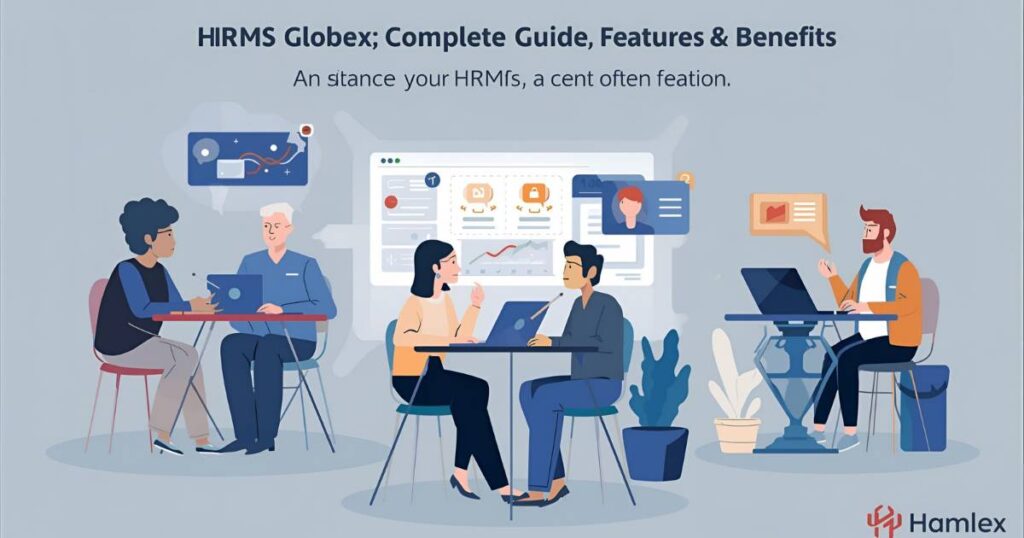
In today’s fast-paced world, managing human resources is not just about payroll and attendance; it’s about building a strategic backbone that supports growth, engagement, and compliance. This is where HRMS Globex comes in. If you’re curious about what HRMS Globex is, why companies are adopting it, and whether it’s the right HR tool for your business, you’ve come to the right place. In this article, we’ll unpack everything: features, benefits, pros and cons, real-world use cases, and more.
What Is HRMS Globex?
HRMS Globex is a cloud-based Human Resource Management System (HRMS) designed to centralize and automate many human resource functions, from payroll and attendance to recruitment, performance evaluations, and analytics.
It’s built to scale, making it suitable for small startups as well as large enterprises. The platform’s modular structure means companies can pick and choose which functions they need, helping them avoid paying for unused features.
Why HRMS Globex Matters: The Case for Modern HR
Traditional HR systems spreadsheets, paper files, and siloed software, can slow down operations, introduce errors, and make compliance harder.HRMS Globex solves this by consolidating all HR data into one unified system.
Here’s why it matters:
- Efficiency: Automation reduces manual tasks so HR teams can focus on strategy.
- Accuracy: Payroll, attendance, and performance data are more reliable, reducing risk.
- Employee empowerment: Through self-service portals, employees can manage their own data, leave, and payslips.
- Scalability: The system adapts as your business grows.
- Compliance & security: Keeps track of labor laws, offers encryption, and supports role-based access.
- Data-driven decisions: Analytics and reporting tools help HR leaders make smarter, proactive decisions.
Key Features of HRMS Globex
Here is a detailed breakdown of the most powerful and commonly used modules offered by HRMS Globex:
1. Employee Self-Service (ESS) Portal
- Employees can view and update personal information.
- Apply for leave, check pay slips, and review attendance – all from the portal.
- Reduces reliance on HR for routine queries.
2. Payroll & Compensation
- Automates salary calculation, tax deductions, overtime, and bonuses.
- Ensures compliance with labor and tax laws.
- Integrates with banking systems for direct payouts.
3. Attendance, Time & Leave Management
- Real-time attendance tracking (biometric, geo-fencing).
- Shift scheduling, overtime tracking, and work-from-home monitoring.
- Leave module supports flexible policies, automated accruals, and approvals via mobile.
4. Recruitment & Onboarding
- Applicant Tracking System (ATS) to post jobs, track applicants, and schedule interviews.
- Onboarding workflows: new employees fill in documents, sign contracts, and complete checklists online.
- Background checks, offer letter generation, and candidate evaluation are streamlined.
5. Performance Management
- Supports goal setting, 360-degree feedback, and KPI tracking.
- Appraisal cycles can be customized and automated.
- Continuous feedback mechanisms help foster a growth-oriented culture.
6. Learning & Development (L&D)
- Create and manage training programs, learning pathways, and certifications.
- Track employee progress, course completion, and skill enhancement.
- Integration with external learning platforms is possible.
7. Reporting & Analytics
- Custom dashboards for HR metrics (turnover, attendance, payroll costs).
- Predictive insights using AI/analytics: identify attrition risk, forecast hiring needs.
- Audit trails, compliance reporting, and role-based access to sensitive data.
8. Security & Access Control
- Role-Based Access Control (RBAC): restrict access based on user roles.
- Multi-Factor Authentication (MFA) for secure logins.
- Encryption for data at rest and in transit; audit logs provide transparency.
- Single Sign-On (SSO) support for easy and secure access.
9. Remote Workforce Support
- Cloud-based access means HRMS Globex can be used from anywhere.
- Mobile app support allows managers and employees to perform tasks on the go.
- Offline/low-connectivity support (in some cases) makes it flexible for field teams.
Benefits of HRMS Globex: Pros & Advantages

Pros
- Streamlined HR Operations
By automating repetitive tasks, HRMS Globex frees HR teams to focus on higher-value strategic work. - Improved Accuracy and Compliance
Payroll and attendance errors are minimized. It helps organizations stay compliant with local labor regulations. - Empowered Employees
With the ESS portal, employees manage their own leaves, payslips, and personal info, reducing HR queries. - Scalability
Modular design means companies only pay for what they need now and can scale as they grow. - Data-Driven Decisions
Advanced analytics and reporting help HR and leadership predict workforce trends, spot risks, and make more strategic decisions. - Security
Role-based access, MFA, SSO, and encryption ensure sensitive HR data is well-protected. - Remote & Flexible Work Support
Cloud infrastructure and mobile access make it ideal for hybrid or fully remote teams. - Better Employee Engagement
Feedback tools, performance reviews, and learning modules help build a more engaged workforce.
Drawbacks & Challenges: Cons to Consider
No system is without trade-offs. Here are some potential cons or challenges associated with HRMS Globex, based on user-reported and commonly cited issues.
- Implementation Complexity
- Migrating legacy data (old HR records, payroll history) can be time-consuming.
- Requires planning, training, and possibly consulting to get the configuration right.
- Cost Considerations
- While modular design helps, advanced features (like AI analytics or L&D) may cost more.
- For very small firms, upfront cost or subscription fees may be a barrier.
- Change Management
- Employees and HR staff may resist moving from spreadsheets or paper to a fully digital system.
- There may be a learning curve, especially for non-technical users.
- Data Security Risks
- Though Globex offers strong security, cloud-based systems inherently involve risk data breaches, misconfigurations, or poor user password hygiene can be issues.
- Though Globex offers strong security, cloud-based systems inherently involve risk data breaches, misconfigurations, or poor user password hygiene can be issues.
- Over-Reliance on Internet
- If your team works in remote locations with poor internet, cloud access might be slower or unreliable.
- Some features (mobile, real-time) may be less effective in low-connectivity contexts.
- Customization Limits
- While modular, extreme customizations may not be supported or may require more effort and cost.
- Integration with legacy or very niche systems (old ERP or proprietary software) could be challenging.
How HRMS Globex Works: Implementation Process

Here’s a step-by-step walkthrough of how a business might implement and start using HRMS Globex successfully:
- Needs Assessment
- Conduct an internal audit: What are your HR pain points? Payroll errors? Slow onboarding?
- Define key goals: Reduce payroll time, increase self-service, improve compliance.
- Decide which modules you need (payroll, attendance, performance, recruitment, etc.).
- Module Selection
- Select only the relevant modules for now; you can always scale later.
- Work with stakeholders (HR, finance, leadership) to choose wisely.
- Data Migration
- Export existing data (employee records, payroll history, attendance logs).
- Clean up and format data for import.
- Use Globex’s migration tools or support team to bring data into the new system.
- Configure Workflows
- Set up workflows for leave approvals, payroll cycles, and hiring pipelines.
- Define roles and permissions (who approves what, who has access).
- Customize dashboards and reports as per your business needs.
- Training & Onboarding
- Train HR, managers, and employees. Use live sessions, webinars, or how-to guides.
- Encourage early adoption by showing employees how to use ESS features.
- Provide support channels for questions during the rollout.
- Go Live
- Launch the system gradually (e.g., start with payroll module, then add attendance).
- Monitor usage, collect feedback, and fix any teething issues.
- Use analytics dashboards to track KPIs (onboarding time, payroll errors, leave cycle times).
- Continuous Optimization
- Use reports and predictive analytics to identify improvement areas (turnover risk, underutilized training).
- Periodically review user feedback and adjust workflows or permissions.
- Scale by adding modules as needed (L&D, AI-driven recruitment, etc.).
Real-World Use Cases: How Businesses Use HRMS Globex
Here are a few real (or realistic) scenarios where HRMS Globex has been or could be transformational:
- Mid-Sized IT Firm
- A 200-employee company adopted Globex to centralize attendance, payroll, and performance.
- Result: 30% reduction in payroll errors, 50% faster onboarding.
- Manufacturing Business with Field Workers
- Workers clock in using biometrics or mobile geo-fencing; remote attendance is tracked.
- Shift scheduling and overtime are automated; HR saves hours of manual tracking.
- Global Enterprise with Multiple Offices
- Cloud-based platform allows offices in different geographies to use the same system.
- The compliance module helps track local labor law differences and generate audit reports.
- Growing Startup
- Initially used ESS and payroll modules; then added performance management and recruitment as they scaled.
- The analytics module flagged early turnover risk, enabling proactive retention measures.
Risks and Considerations Before Adopting HRMS Globex
While HRMS Globex offers many benefits, it’s not a silver bullet. Here are a few risk factors and things you should think through carefully before buying or implementing.
- Vendor Lock-In: Because it’s modular and possibly customized, moving away later to another HRMS might be complex and costly.
- Total Cost of Ownership: Beyond subscription, factor in implementation cost, training, data migration, and support.
- User Adoption: If your workforce is not tech-savvy, adoption might be slow. Engaging training and support are essential.
- Data Privacy Laws: Make sure Globex complies with local data protection regulations (e.g., GDPR, or India’s data laws).
- Scalability Needs: If you’re a very small business, initial modules are enough; but as you grow, unplanned scaling might strain budget or processes.
Best Practices for Getting the Most Out of HRMS Globex

To maximize the impact of HRMS Globex in your organization, here are some best practices:
- Set Clear Objectives
Define KPIs you want to improve (e.g., reduce payroll errors by X%, improve staff retention) before implementation. - Get Stakeholders Involved
Engage HR, finance, leadership, and even a few “power users” early on. Their buy-in ensures smoother rollout. - Maintain Clean Data
Cleanse your legacy data – duplicate employee records, incorrect attendance logs, or incomplete profiles – before migration. - Promote the Self-Service Portal
Encourage employees to use the ESS portal: show them how to apply for leave, download payslips, etc. This reduces HR dependency. - Use Analytics Proactively
Don’t just run reports, use predictive insights to identify at-risk teams, forecast hiring, or optimize performance reviews. - Review Regularly
Monitor system usage, get feedback, and refine workflows every few months. Adjust roles, permissions, and modules as necessary. - Train Continuously
Hold refresher training and share new feature updates. Use short video tutorials or tip-of-the-week emails.
Conclusion
HRMS Globex is a powerful, scalable, and flexible platform that can transform how your HR team works, from automating payroll and attendance to offering AI-powered insights and self-service tools. Its modular, cloud-based design makes it suitable for a wide variety of business sizes and sectors.
While there are challenges like implementation cost, change management, and data migration, the long-term benefits often outweigh the initial hurdles. With proper planning, adoption, and continuous improvement, HRMS Globex can help free up your HR team, improve data accuracy, meet compliance requirements, and support a more engaged, productive workforce.
If you’re evaluating HRMS solutions or considering an upgrade, HRMS Globex deserves strong consideration. Share your thoughts below: Are you using Globex already? What’s been your experience? Or, if you’re still deciding, what’s holding you back?
Frequently Asked Questions (FAQ)
Q1. Is HRMS Globex suitable for small businesses?
Yes, HRMS Globex’s modular structure allows small businesses to pick only the features they need, saving cost.
Q2. Can Globex handle multi-location or remote teams?
Absolutely. It’s cloud-based, supports mobile access, and offers real-time attendance tracking.
Q3. How secure is employee data on HRMS Globex?
Very secure, it uses role-based access control (RBAC), multi-factor authentication (MFA), encryption, and audit trails.
Q4. Does Globex support performance reviews and continuous feedback?
Yes, it supports 360-degree feedback, goal setting, KPI tracking, and automated appraisal cycles.
Q5. Can I integrate Globex with my accounting or ERP system?
Yes, many businesses integrate Globex with their finance and accounting systems for seamless payroll and data synchronization.
Q6. Is there a learning curve for employees?
There can be, but with proper training and ongoing support, adoption usually becomes smooth.
Q7. What kind of reports can I generate with HRMS Globex?
You can create custom dashboards for metrics like turnover, absenteeism, payroll cost, performance, and more.
Q8. Does Globex comply with labor laws?
Yes, it includes compliance features and audit reporting to help businesses stay aligned with relevant labor regulations
Pingback: BizGurukul Real or Fake? Honest Review for Indians