
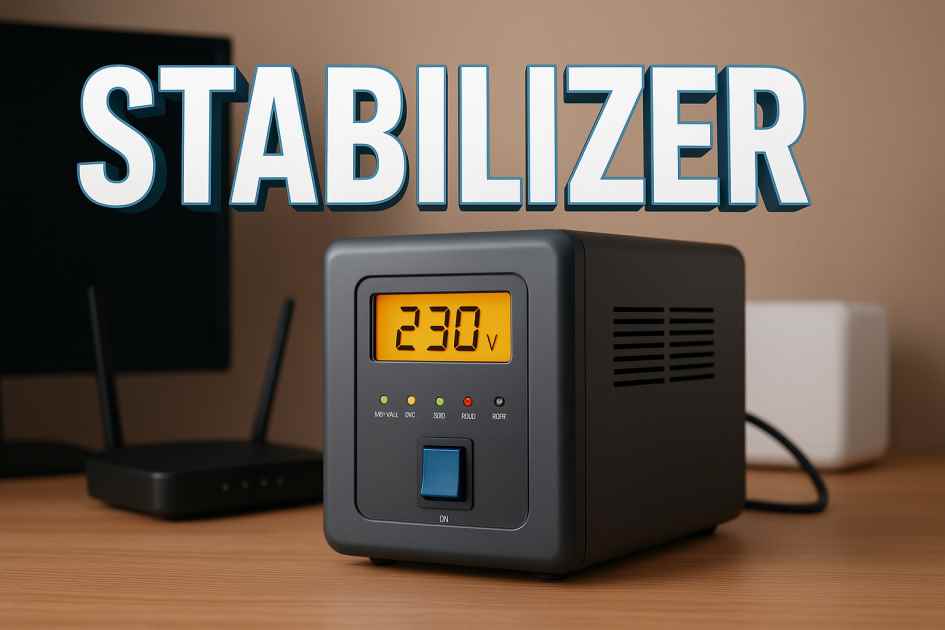
A stabilizer is a simple word with powerful consequences. Whether you are protecting sensitive electronics, ensuring steady power to a workbench or smoothing voltage for home appliances a stabilizer plays a central role in preventing damage and keeping systems running smoothly.
This guide explains what a stabilizer is, how it works, how to choose the right one and how to install, maintain and troubleshoot it with confidence. The tone is human friendly and practical so you can act on the advice right away.
Why a stabilizer matters
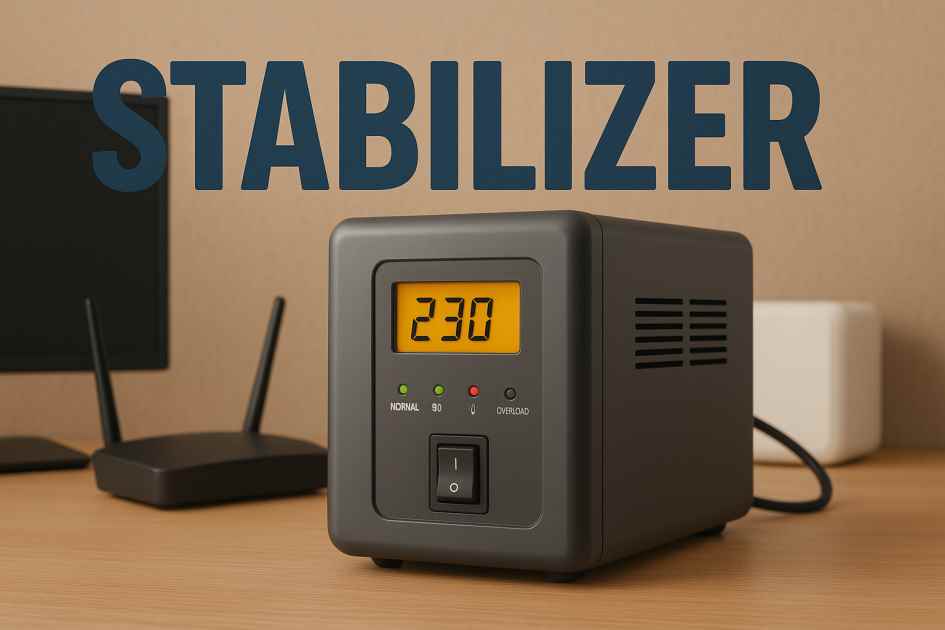
A stabilizer protects equipment from the costs of unstable power and fluctuating conditions. Short term spikes and dips can degrade components, cause data loss or create safety hazards. Long term instability reduces the life of motors, compressors and electronic circuits. Using a stabilizer reduces the risk of sudden failure and often pays for itself through avoided repair and replacement costs.
Many people think of a stabilizer as a single box that sits between power and a device. In practice stabilizers come in many forms from line interactive units for small loads to servo based designs for higher precision applications and digital solutions for complex systems. In each case the goal is the same: keep the output within safe limits under changing input conditions.
Main types of stabilizer and where each fits
Understanding the available types helps you match a stabilizer to a real need. Three broad families dominate the market: basic automatic voltage regulation line interactive and servo controlled solutions. Each family has strengths and limitations that matter for selection.
Quick comparison table for stabilizer types
| Type | Typical use case | Performance trait | Cost tendency |
| Basic mechanical or relay based | Small appliances simple loads | Fast simple sometimes coarse regulation | Low |
| Line interactive | Home electronics computer routers | Good balance of speed and regulation | Moderate |
| Servo controlled | Laboratory equipment sensitive electronics | Precise stable output under wide variation | High |
| Static or digital | Telecom and data center subsystems | Very fast response low maintenance | High |
Supplemental quick reference table for capacity and sizing
| Load example | Approximate capacity required | Notes |
| Single television or small refrigerator | 600 to 1000 volt ampere | Consider starting current for motors |
| Home entertainment setup and router | 1000 to 2000 volt ampere | Add margin for future devices |
| Small office or workshop | 3000 to 10000 volt ampere | Consider surge and inrush currents |
| Laboratory bench or sensitive instrument | Model specific consult manufacturer | Precision matters more than raw rating |
How a stabilizer works in plain language
At its core a stabilizer monitors input power and adjusts output to stay inside acceptable limits. Different designs accomplish that adjustment in different ways.
Relay and transformer based stabilizer designs use taps and switching to move the connection point on a transformer coil. When voltage drops the unit selects a tap that increases the output. When voltage rises the unit selects a tap that reduces output. These designs are economical and work well for many common appliances.
Line interactive stabilizers incorporate electronic circuits and sometimes autotransformers to smooth and correct in real time. They react faster than relay only systems and handle frequent small fluctuations gracefully.
Servo based stabilizers use a motor driven variable transformer or an electronic servo circuit to precisely control the transformation ratio. Because the control is continuous rather than stepped, these units deliver very stable power with minimal ripple making them ideal for laboratories, medical equipment and high end electronics.
Static stabilizers use power electronic devices such as thyristors transistors or modern switching elements to rapidly regulate output. They are compact, require less maintenance and respond very quickly to transient events.
Key features to look for when choosing a stabilizer
Choosing a stabilizer is more than picking a number off a specification sheet. Below are the most important features to consider and why they matter.
Rated capacity and headroom
Always size a stabilizer to handle the expected continuous load and surges. Inductive loads like compressors and motors have high inrush currents which can be several times the running current. A stabilizer that only matches the running load may fail during motor start. Add margin to ratings to handle startup currents and small expansions of the system.
Voltage range and regulation band
Check the input range the stabilizer accepts and the tightness of its output regulation. If your supply varies widely choose a unit with a wide input acceptance range. If equipment tolerates only small deviations, pick a model with a narrow regulation band.
Response time
Faster response reduces the chance of sensitive devices seeing harmful transients. Static and digital stabilizers respond in milliseconds whereas relay based systems may introduce short interruptions. Match response time to device sensitivity.
Efficiency and losses
Stabilizers are not lossless. Higher precision designs may consume a small continuous power for regulation. For large installations energy losses can add up so factor efficiency into operating cost.
Maintenance and reliability
Some stabilizers need periodic service such as brush replacement or calibration. Others require minimal maintenance. For mission critical systems choose designs with proven reliability and clear service procedures.
Protection features
Good stabilizers include safeguards such as overload protection under voltage lockout and thermal protection. Surge suppression and lightning protection are valuable in areas with unstable grids.
Form factor and installation footprint
Consider physical size mounting options and whether the unit is floor mounted wall mounted or rack mountable. Cooling requirements can affect placement.
How to calculate the stabilizer size you need
Sizing a stabilizer requires adding up the power demands and accounting for starting surges. Follow these steps.
- List all devices that will be powered. For each device note the running power in watts or volt ampere and the startup multiplier for motors.
- Convert watts to volt ampere if necessary dividing watts by the power factor. If the power factor is unknown, assume a conservative value such as zero point eight for many appliances.
- Sum the running volt ampere ratings and apply a safety margin commonly twenty five to thirty percent.
- Inductive loads include the highest expected inrush current and ensure the stabilizer can handle the surge either for a specified short period or by providing additional capacity.
Example calculation explanation and demonstration tables were provided earlier to show common approximations for typical household and small office loads.
Installation best practices for a stabilizer
Installing a stabilizer correctly keeps it running safely and maximizes protection for the connected equipment.
Placement
Put the stabilizer in a dry ventilated area away from direct sunlight and dust. Maintain the recommended clearance for ventilation and service access.
Wiring and grounding
Use appropriately sized cables and correct protective devices such as circuit breakers or fuses. Ground the stabilizer and the protected load properly to reduce the risk of electrical shock and electromagnetic interference.
Sequence of connections
Connect the stabilizer between the incoming supply and the load. For systems with battery backup or inverters follow the manufacturer recommended wiring sequences to avoid back feeding or damage during switching.
Load distribution
For large installations distribute loads across multiple stabilizers or use a single appropriately sized unit. Avoid overloading one phase in three phase systems.
Commissioning
After installation power up the stabilizer and monitor output under no load and then under load. Verify voltage regulation response and check protection alarms. Document initial readings for future reference.
Maintenance and routine checks
Routine checks prolong service life and prevent unexpected failures.
Monthly visual check
Look for dust accumulation, loose connections, oil leaks or any sign of overheating. Clean ventilation openings if required.
Quarterly electrical checks
Measure input and output voltages under representative load. Check terminal tightness and verify protective devices.
Annual preventive service
Have qualified technicians inspect moving parts filters and internal components. Calibrate electronic controls if recommended by the manufacturer.
Record keeping
Maintain a simple log of readings and service activities. This helps detect trends such as gradual drift in regulation which may precede failure.
Common problems and how to troubleshoot them
A stabilizer may emit alarms or behave unexpectedly. Below are common symptoms, causes and fixes.
Symptom: Frequent tripping
Cause may be an overload short circuit or thermal protection due to inadequate ventilation.
Fix reduce load check wiring and improve ventilation.
Symptom: Output voltage unstable
Cause could be faulty control electronics, weak components or incorrect sizing for the input variation.
Fix test under controlled conditions consult service manual and consider replacing worn parts.
Symptom: Excessive heat
The cause may be heavy continuous load, poor ventilation or aged components.
Fix reduce load, verify cooling fans and clean filters or fins.
Symptom: No output at all
The cause could be input supply problems, blown fuse or internal failure.
Fix verify source power check fuses and breakers and seek professional repair if internal fault is suspected.
Benefits of using a stabilizer beyond protection
Using a stabilizer does more than prevent immediate damage. It can extend the usable life of equipment, reduce the occurrence of intermittent faults, improve performance consistency and reduce downtime. For businesses these benefits translate into less lost productivity, fewer service calls and greater confidence in critical systems.
Safety considerations and regulatory notes
Always follow local electrical codes when installing a stabilizer. Use licensed electricians for major electrical work. Ensure the stabilizer and any accessories meet the applicable safety standards and certifications for your region.
How to choose between replacing and repairing a stabilizer
When a stabilizer fails consider the age cost of repair expected remaining life and the cost of newer more efficient models. Older units may lack modern protections and efficiency gains that newer units offer. If downtime is critical, replacing it with a modern unit may be the better choice.
Environmental factors that affect stabilizer performance
High ambient temperature, dust humidity and salt air reduce reliability. Select units rated for the environment or arrange protective enclosures. Regular maintenance intervals should be shortened in harsh environments.
Integration with other power systems
Stabilizers often work alongside surge protectors, inverters and uninterruptible power supplies. Understand the interaction among devices especially during switching events to avoid conflicts. For example when using an inverter and stabilizer together ensure the sequence of power transfer does not cause repeated cycling.
Cost considerations and life cycle economics
Initial cost is important but consider total cost of ownership which includes energy losses, maintenance and downtime. A slightly more expensive stabilizer with better efficiency may be cheaper over its life than a low cost model that requires frequent service.
Future proofing your selection
Choose a stabilizer with some spare capacity and modular upgrade paths. This reduces the need for replacement when loads increase and preserves investment value.
Case studies and practical examples
Imagine a small clinic where a stabilizer safeguards medical diagnostic equipment. A failure would halt operations and risk patient safety. Choosing a precise servo controlled stabilizer with redundant protections prevents interruptions and ensures equipment calibration remains stable.
In a small factory a stabilizer sized with ample headroom handles compressor starts without nuisance tripping which keeps production steady and reduces labor disruption.
When to involve a professional
If the installation includes three phase systems, high power motors or critical instruments consult a qualified electrical engineer. Complex interactions among protective devices or unusual supply conditions require professional assessment.
Checklist before buying a stabilizer
- Confirm total run load and expected surge currents.
- Verify input voltage range in your location.
- Decide on regulation accuracy required.
- Check cooling and installation space.
- Confirm required protections and certifications.
- Assess maintenance and service support for the product.
- Compare total cost of ownership not just purchase price.
Troubleshooting quick guide
- No output check incoming supply and fuses.
- Repeated trips reduce load and inspect wiring.
- Slow response consider upgrading to an electronic design.
- Strange noises schedule a professional inspection.
Conclusion
A stabilizer is an essential protective device where power quality matters. Choosing the right stabilizer requires understanding load characteristics of the environment and the sensitivity of the equipment.
Proper installation routine maintenance and timely service keep a stabilizer performing as intended and protect valuable equipment.
FAQ
Q What is a stabilizer and why do I need one for household appliances
A: A stabilizer is a device that controls voltage and ensures a steady supply to appliances. It prevents damage from voltage spikes and helps equipment run efficiently especially where the incoming power supply is unstable.
Q How do I know what capacity stabilizer I need for my home
A: Add up the volt ampere rating of all devices that will run through the stabilizer and include starting currents for motors. Apply a safety margin of around twenty five to thirty percent to the total and choose the next available rated model.
Q Can a stabilizer protect against all types of electrical problems
A: Stabilizers regulate voltage and protect against fluctuations but they are not a substitute for surge protection or lightning arrestors. For comprehensive protection use a stabilizer alongside surge protection and proper grounding.
Q How often should a stabilizer be serviced
A: Perform monthly visual checks, quarterly electrical inspections and an annual preventive service by qualified personnel. Harsh environments may require more frequent servicing.
Q Is a stabilizer necessary if I use an uninterruptible power supply
A: An uninterruptible power supply provides backup power and some voltage conditioning but may not replace the regulation provided by a stabilizer depending on the UPS design. Combining both can offer backup power and precise voltage control.
Q What are signs that a stabilizer is failing
A: Frequent tripping, persistent overheating, unstable output and unusual noises are signs of failure. If problems persist after simple checks contact a service technician.
Q Are all stabilizers the same quality
A: No quality varies by design components and manufacturer. Look for reliable brands with clear specifications, good service networks and positive reviews to ensure long term performance.
Q Can I install a stabilizer myself
A: Simple single phase plug in units may be installed by competent users following the instructions. For hard wired installations three phase systems or when in doubt hire a licensed electrician to ensure safety and compliance.
Q Does a stabilizer need to be grounded
A: Yes proper grounding reduces risk of electric shock and improves performance by providing a reference for surge suppression and filtering.