

Campus life is more than classes and exams. It is the mix of friendships, projects, clubs, events, career moves, and small everyday routines that shape who you become. Veltech Clique is the central place many students use to manage academic tasks, discover campus events, join clubs, and keep track of payments and official notices.
This article gives you a clear, practical guide to understanding what Veltech Clique does, how to use it effectively, how to convert campus activities into career advantages, and common problems and solutions. Read on to get hands on suggestions you can start using today.
What is Veltech Clique and why it matters
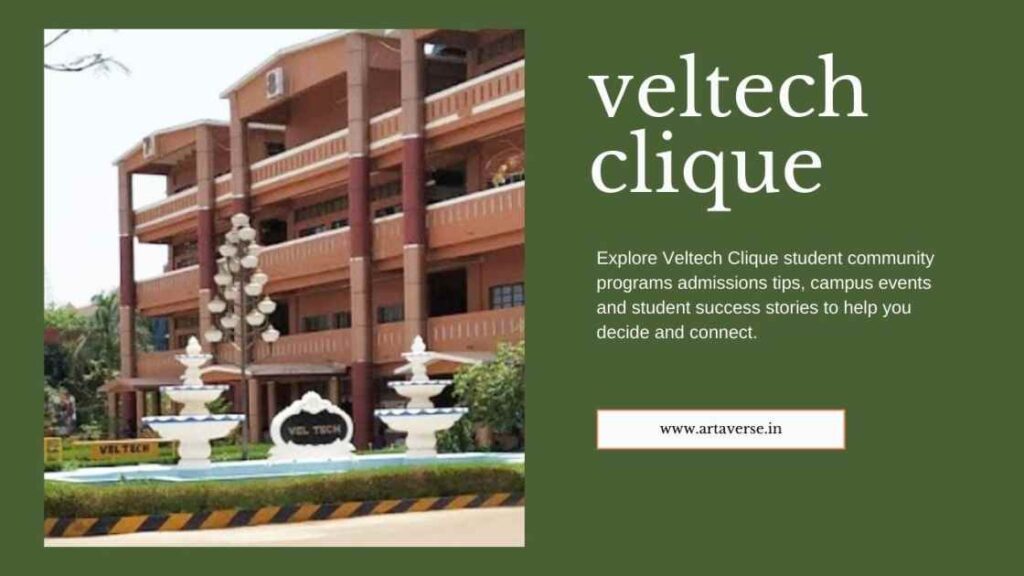
Veltech Clique functions as a unified student portal that brings together academic records, administrative services, event announcements, club communications, and payment systems. Think of it as a digital campus noticeboard, finance counter, and student services desk all rolled into one.
Why it matters now
- It saves time by centralizing multiple student tasks into a single dashboard.
- It reduces the need to physically visit offices for routine processes.
- It helps you find events, clubs, internships, and other opportunities, so you can make the most of campus life.
Using the portal wisely makes everyday campus life smoother and helps you build a track record that can matter later for jobs or higher studies.
Core features explained in plain terms
Veltech Clique typically includes a number of practical modules. Here’s what each one does and why you should care.
Account dashboard and notifications
Your dashboard is the first thing you see after logging in. It usually lists new announcements, upcoming deadlines, messages from faculty or departments, and quick links to payment or registration pages. Spend time early on to learn what each section shows. A quick glance each day keeps you ahead of deadlines.
Academic and administrative services
From course registration to requests for transcripts and certificates, many administrative tasks are handled through forms on the portal. This reduces paperwork and gives you a digital trail you can refer to later.
Fee and payment management
You can view outstanding dues, pay fees online, and download payment receipts. Saving receipts and noting transaction IDs helps resolve any payment issues quickly.
Event and club coordination
The portal often hosts event calendars and club announcements. It’s a primary place where societies post details about meetups, workshops, competitions, and calls for volunteers. If you want to take part in events or form a team for a contest, this is where to find the start point.
Placement and career resources
Placement schedules, company visit notices, application links, and training session updates are commonly posted on the portal. Treat these announcements seriously and respond quickly when opportunities appear.
A practical first week plan for new students
Starting strong helps you avoid headaches later. Use this short checklist in your first week on campus.
- Verify your account and set a secure password.
- Explore the dashboard sections to identify announcements, payments, academics, and placement areas.
- Turn on notifications for essential sections such as placement, clubs, and finance.
- Join one technical club and one non technical group to balance learning and wellbeing.
- Note down key campus contacts such as technical support, finance office, placement cell, and club coordinators.
This simple routine gives you clarity and prevents small things from becoming big problems.
How to use Veltech Clique for effective time management

Portals are useful, but only if you use them consistently. Here are practical habits that work.
- Schedule 10 to 15 minutes twice a week to check the dashboard and act on new items.
- Keep a dedicated folder for digital receipts, certificates, and official notices.
- Use calendar reminders for important deadlines you find on the portal.
- When registering for events or placements, note eligibility criteria and deadlines immediately.
Small consistent actions prevent last minute stress and missed chances.
Clubs and student activities: choosing what matters
Clubs are one of the best ways to learn skills outside the classroom and expand your network. Here’s how to pick and benefit from them.
Types of clubs to consider
- Technical clubs: coding, robotics, AI, electronics, and similar technical focuses.
- Creative and cultural clubs: music, drama, dance, visual arts, and writing.
- Sports and fitness clubs: team sports, athletics, and wellness activities.
- Community and social clubs: volunteering, outreach, and social responsibility projects.
- Professional interest cells: entrepreneurship, finance, and industry specific groups.
How to choose clubs wisely
- Pick clubs aligned to your career goals to gain relevant experience.
- Also choose a club that helps you relax and recharge. Balance matters.
- Consider club size and activity frequency; some clubs are highly active and demanding, others meet occasionally.
- Look for mentorship opportunities—clubs with faculty or alumni mentors can be especially valuable.
How to get value from club involvement
- Take on small leadership roles to develop responsibility and communication skills.
- Document your contributions and any certificates or awards you earn.
- Use club projects as portfolio pieces for internships and job interviews.
Academic support beyond the classroom
Veltech Clique is useful for academic administration, but the campus itself has resources to help you learn better.
Labs and project facilities
Attend lab sessions, workshops, and project clinics regularly. These practical sessions often lead to better understanding than lectures alone and build tangible proof of your skills.
Study groups and peer learning
Form or join study groups. Peers often explain concepts in plain language and group projects mimic real workplace collaboration.
Faculty interaction
Use office hours and project meetings to ask focused questions. Faculty guidance can point you toward useful readings, project ideas, and research opportunities.
Project work and research: build something real
Projects demonstrate applied abilities. Here’s a how to approach them.
- Start with a clear problem statement or objective.
- Define measurable outcomes: a prototype, a report, a demo, or a publication.
- Choose teammates with complementary skills and clear roles.
- Use version control, documentation, and a shared repository to keep work organized.
- Prepare a short presentation and a one page summary to explain your work to recruiters.
Tangible outputs from projects are some of the strongest evidence you can show employers.
Placement readiness: practical steps that make a difference
Campus placements are not just about grades; they are about preparation and presentation.
Portfolio and resume
- Build a concise resume that lists projects, internships, roles in clubs, and key skills.
- Keep a portfolio — a simple collection of projects, links to demos, and a one page summary for each project.
Interviews and mock sessions
- Participate in mock interviews and resume clinics. Practicing common questions and coding rounds reduces anxiety.
- Practice describing your projects in simple terms: challenge, approach, outcome, and your role.
Internships and training
- Apply early for internships; they often lead to full time roles.
- Use short internships and training programs to gather industry exposure and references.
Common portal problems and how to solve them
Portals are reliable most of the time, but issues happen. Here are typical problems and practical fixes.
Problem: login or account recovery issues
Solution: Use the portal’s account recovery tool, check your institutional email for instructions, and contact technical support if needed. Keep ID numbers and proof of identity ready.
Problem: payment shows pending or failed
Solution: Save the payment receipt and transaction ID. Contact the finance office with these details and follow up with technical support for status updates.
Problem: missing announcements or event updates
Solution: Confirm your notification settings and join official lists for your department or club. If something is missing, contact the event organizer directly.
Problem: portal downtime during deadlines
Solution: Plan ahead for critical tasks. If you face downtime, document the exact time and take screenshots if possible. Contact the concerned office and request an extension or alternative submission method.
Privacy and account safety: practical rules
Your portal contains sensitive information. Follow these rules to protect it.
- Use a strong unique password and change it if you suspect compromise.
- Do not share login credentials with anyone.
- Use official campus devices or secure personal devices for transactions.
- Log out from public computers and clear browser history after use.
- Report suspicious emails or messages immediately to the technical team.
Simple precautions prevent identity and financial problems later on.
Turning campus activities into career assets
It is not enough to participate; you must present your experiences effectively.
Translate activity into results
- Instead of listing a club name, describe your contribution and its impact. For example, “Led a team to develop a prototype that won a regional hackathon” is stronger than “member of coding club.”
- Quantify outcomes where possible: participants reached, problem solved, improvement in process or efficiency.
Use recommendations and references
- Ask faculty and internship supervisors for short recommendation notes. These are powerful during job applications.
- Keep brief records of letters or emails that validate your role.
Prepare a short elevator pitch
- Have a 30 to 60 second summary ready that explains who you are, what you do, and what you want. Practice this for networking events and interviews.
Real student scenarios and step by step responses
Here are realistic situations and how to handle them using the portal and campus resources.
Scenario 1: You need an official transcript urgently
Steps: Submit the transcript request through the portal, note the reference number, and follow up with the academic office if processing takes longer than expected. Keep proof of application.
Scenario 2: You want to join a national level contest
Steps: Check event announcements and eligibility on the portal, register early, coordinate a team through a club, and use faculty mentors for advice and letters of recommendation.
Scenario 3: Payment or scholarship issue arises
Steps: Gather receipts and communication records, contact the finance office and scholarship cell, and document every conversation and response for escalation if required.
Pros and cons of relying on a campus portal
A realistic look at what works and what may not.
Pros
- Consolidates multiple campus services in one place.
- Reduces physical paperwork and saves time.
- Makes event discovery and registration easier.
- Provides a trail of official documents and receipts.
Cons
- Technical issues may disrupt access during critical times.
- Some processes may still require manual follow up.
- New users may face a learning curve during the first weeks.
Knowing both sides helps you plan around limitations and maximize benefits.
Practical tips and quick wins
- Schedule a weekly portal check time to avoid missed notices.
- Keep a digital folder for receipts and official letters.
- Volunteer for a small role in a club to build connections.
- Keep detailed notes on projects to quickly prepare interview responses.
- Use campus career services and alumni networks proactively.
These small adjustments compound and create visible advantages during placements and later career steps.
Measuring your campus involvement impact
To evaluate whether your campus activities are paying off, track measurable indicators:
- Number of projects completed and their outcomes.
- Internships and job offers received through campus networks.
- Leadership roles and awards earned.
- Skillset improvements evident in projects, code repositories, and presentations.
Recording these indicators helps you present a strong case to employers and graduate programs.
Conclusion
Veltech Clique is a practical and powerful tool when used intentionally. It streamlines routine tasks, connects you to events and clubs, and surfaces career opportunities. The true value comes when you combine regular portal use with active participation in clubs, projects, and placement preparations.
Start with the basics: secure your account, learn the dashboard, join two clubs, and document every achievement. Small consistent actions will turn everyday campus experiences into clear, measurable outcomes that benefit your future.
Frequently Asked Questions
What is Veltech Clique
A: Veltech Clique is the student portal that centralizes academic records, administrative services, event announcements and payment systems for students.
How do I recover my login if I forget it
A: Use the portal’s account recovery or password reset option and follow the instructions sent to your institutional email. If that fails, contact technical support with your student ID.
Can I pay tuition through the portal
A: Yes, you can typically view dues, pay fees online, and download payment receipts for your records.
How do I join clubs and events
A: Look for club announcements and event postings on the portal or noticeboards, then follow the registration instructions provided by the club or organizing department.
What should I do if a payment shows pending
A: Save the payment confirmation details and transaction ID, then contact the finance office and technical support with these records to resolve the issue.
How do I use campus activity for placements
A: Document projects and roles clearly, build a concise resume and portfolio, participate in mock interviews, and use placement resources to prepare for company visits.
How can I protect my portal account
A: Use a strong unique password, do not share credentials, log out on public computers, and report suspicious activity to the technical team immediately.
Pingback: Veltech Clique Login — Simple Step-by-Step Guide to Access Your Student Portal