
Artaverse speaks to readers who spend time with apps, software, digital products, trend pieces, AI coverage, and media habits shaped by screens that are always within reach. Its category structure makes that clear. The site positions itself as a daily hub for tech, AI, games, news, blog content, and related digital subjects, which means its audience is already used to thinking about how online tools work, how interfaces guide attention, and why some platforms feel easier to use than others. That is exactly where a live cricket page becomes relevant. The strongest angle is not old-school sports commentary. It is the way a real-time page handles speed, scanning, and clarity when a user wants the state of a match without sitting through a full stream or chasing updates across scattered tabs.
A Match Page Now Works Like a Lightweight Dashboard
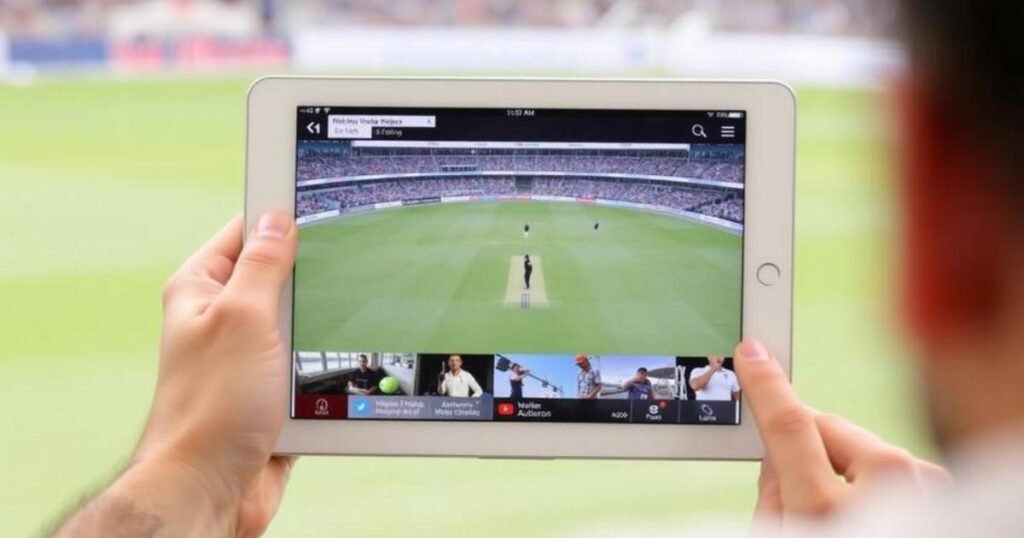
For a tech-minded reader, a cricket live online page is easier to appreciate when it is viewed as a compact dashboard rather than as a simple score page. The live cricket screen tied to this brief shows leagues, short time windows such as 1H, 3H, 12H, and 24H, an innings label, and a winner field that sits close to the active match view. That structure matters because it reduces the gap between opening the page and knowing what is happening. There is no long warm-up period for the user. The eye lands, finds the match frame, catches the current state, and moves on. In digital terms, that is a strong example of information density handled with restraint instead of clutter. It fits the behavior of people who check live data in short bursts while moving between work, chat, video, and mobile notifications.
Why This Format Fits Second Screen Behavior So Well
A large share of live sports consumption no longer happens through one dedicated screen with full attention locked in place. Many users keep a match nearby while doing something else, and that habit has changed what a live product needs to do. A page like this works because it respects split attention. It does not ask the user to commit to a full viewing session before offering value. It gives enough live context for a person to check in during a commute, between meetings, in the middle of app switching, or while following a conversation in another window. That is a very current tech behavior, and it sits comfortably inside the editorial space Artaverse already occupies. Readers are used to articles about software use, mobile habits, and digital convenience, so a live cricket page becomes interesting as a case of real-time interface design shaped around quick decision-making and repeat visits rather than one long immersive session.
Clear Hierarchy Keeps Live Data From Feeling Heavy
One of the easiest ways to lose a user is to show too much at once without telling the eye where to go first. Live pages avoid that problem only when the hierarchy is handled well. On this cricket page, the visible order of league, match, innings, and outcome cues gives the screen a readable sequence. That means the user does not need to decode the page from scratch every time it is reopened. This is where the product becomes interesting for a tech and digital media audience. The appeal comes from structure, not hype. A page built around real-time changes has to be readable under pressure, especially on mobile, where a person may be checking updates with one hand and limited attention. When the layout is compact and the match state is easy to spot, the page becomes less tiring to revisit. That alone can change how often people return during a match window and how long the product stays part of their digital habit.
It Also Solves a Familiar Streaming Problem
Streaming is useful, but it is not always the best answer to every live sports moment. Sometimes the user wants context, not full immersion. Sometimes the connection is unstable, the setting is too public, or the available time is too short for a video session. A live cricket page covers that gap better than many people expect. It gives match awareness without the commitment that streaming demands. For Artaverse readers, this matters because it mirrors the wider shift in digital product use. People increasingly choose formats that match the exact size of the moment. A short article instead of a long video. A summary card instead of a report. A live page instead of a stream when the goal is simply to know whether the innings has turned, whether the match tightened, or whether the result is beginning to look settled. That kind of modular use is deeply tied to current tech behavior, which makes the page a natural fit for this audience.
The Product Feels Current Because the Use Case Is Current
What gives this kind of page staying power is not novelty. It is relevance to the way people already move through screens. Artaverse covers practical digital topics because readers want tools and platforms that make sense in daily use, not just in theory. A live cricket page belongs in that same conversation when it is framed as a real-time utility shaped for modern attention patterns. It offers fast checks, a visible match state, and a compact path to the information most people actually want first. Those are not flashy features. They are the kinds of choices that make a product feel current because they respect real screen behavior. In that sense, the page is less about sports alone and more about the ongoing shift toward lighter, faster, more targeted digital experiences that work well even when time is short and attention is split.
The Better Digital Products Usually Respect Time First
The most useful online products often win by respecting time before they do anything else. That is the strongest point this live cricket page brings to an Artaverse-style audience. It does not need a loud pitch to hold interest. Its value shows up in the way it shortens the path between opening the page and getting the answer. For readers who think in terms of apps, interfaces, and digital workflows, that is a meaningful trait. The page turns a live sports moment into something easier to monitor, easier to revisit, and easier to fit into a day already filled with other screens. That is why it works beyond a pure fan context. It behaves like a modern utility. For a site centered on tech, software, and digital behavior, that is the angle worth paying attention to.
Read more articles – Artaverse